


- One in five Brits skip their full allowance, with 26% leaving 15-plus days behind.
- Allowance and carry-over issues drive 39.6% of unused leave during the great British no-break.
- Mid-level managers feel the most pressure, so transparent planning removes guilt and protects wellbeing.
At Timetastic, we believe work shouldn’t be a marathon of endurance. To understand the current state of rest, we surveyed members of the public to find out what they really think about annual leave. The result shows a workforce struggling with “leave guilt”, heavy workloads, and a looming burnout crisis.
With expert commentary from Sarah Crammond, Service and Support at Timetastic, we give deeper insights into how these trends are shaping the modern workplace and what businesses can do to better support their teams.
The methodology
Our data was collected by surveying 6,000 respondents from Timetastic’s client database, ranging from ages 18 to 55+ across the UK. Participants answered 20 multiple-choice questions regarding their leave habits, mental health, and workplace culture.
Headline findings
- 21% of Brits are not taking advantage of their full annual leave from work.
- Over a quarter (28%) had on average about 1-5 days of holiday left to take.
- One in nine (11%) felt pressure not to take leave, citing workload and guilt as main reasons.
- When breaks were left too long, nearly half (45%) believed this negatively impacted their mental health, with 100% believing their stress at work increased.
- 89% of people admitted to having better mental health when these breaks were actually taken.
The state of annual leave
While many intend to use their allowance, a significant portion of the UK workforce is leaving holiday on the table.
Will you use all of your annual leave?
Our data shows that roughly one in five (20.7%) workers will not use their full annual leave allowance. When we look at the gender split, men are slightly more likely to skip their leave (21.32%) compared to women, suggesting a slight but persistent gap in how different genders prioritise or feel permitted to take time off.
Annual leave usage by age
Interestingly, the older generation was less likely to take their full annual leave compared to their younger counterparts. We often see stereotypes regarding Gen Z boundaries versus Baby Boomer work ethics, and the data paints a nuanced picture of these generational habits.
Will you use all of your annual leave?
While the 18-24 age group is the most diligent about taking their leave (82%), the data reveals a deeper tension regarding seniority and job security. Despite the higher usage among the very youngest, it was more junior team members overall who expressed a reluctance to take their full allowance compared to their senior counterparts.
This raises important questions about modern workplace stereotypes. Are junior staff feeling a “new starter” pressure to make an impression? Or are they simply more nervous about the judgment that comes with booking time off?
Sarah Crammond, Service and Support at Timetastic says, “While senior leaders may have more control over their schedules, those entering the workforce today are navigating a culture where 'always-on' availability is often mistaken for commitment.”
“It suggests that while younger workers value their wellbeing, they may still feel the weight of traditional work ethics that prioritise ‘grind’ over recovery”.
Understanding the barriers to rest
If the goal is for everyone to recharge, we have to look at what is standing in the way. For those who couldn’t take their full leave, the reasons were rarely about a lack of desire to go away or a sudden love for the office.
Instead, the data reveals structural habits that make rest feel like a logistical nightmare.
The top barrier — allowance and carry over issues (39.6%) — highlights a systemic problem in how leave is managed. When policies are too rigid, or ‘use it or lose it’ deadlines are poorly communicated, staff end up losing their hard-earned rest simply because they couldn’t navigate the red tape.
21.3% of respondents cited workload and timing issues. This is a clear indicator that many employees feel their roles are too demanding to allow for a break, suggesting that when leave is approved, the work doesn’t stop. For many, the prospect of a holiday becomes even more stressful than staying at their desk because of the mountain of emails waiting for them when they return.
“Efficient annual leave isn’t just about ticking boxes; it’s about creating breathing room for your team,” Crammond explains.
“When managers have clear visibility of who is off and when, they can distribute workloads more fairly, ensuring that no one feels like their holiday is an inconvenience to the business. This is where tools like Timetastic really shine — they remove the friction and the guesswork. By making the process transparent and simple, you take the ‘guilt’ out of the equation and ensure your team returns refreshed, not just more stressed than when they left.”
How much annual leave was actually left?
The volume of leave being left behind is a big concern for workforce health. While 18% of Brits managed to finish the year with zero balance, a staggering 26% had more than 15 days left, effectively two whole working weeks of rest that were never taken.
When you consider that 89% of respondents admitted their mental health improves after taking a break, leaving 15 or more days on the table is a massive missed opportunity for both the employee and the employer. This highlights the need for a more supportive culture that doesn’t just allow holidays but actively encourages them as a vital part of a smart business strategy.
Is company culture to blame?
While the vast majority of workers feel they have the freedom to book time off, the data reveals a problem across the UK.
Do you feel pressure not to take annual leave?
11% of Brits feel active pressure not to take their annual leave. While that might seem small at a national level, this pressure often concentrates within specific teams or roles, creating pockets of burnout that can disrupt entire businesses.
When we look at gender, the split is remarkably close, though women (11.7%) report feeling this pressure slightly more than their male counterparts (10.6%).
The squeeze by job level
The most striking insight comes from looking at job roles. We often assume that the more senior the role, the higher the pressure, but our data tells a different story. It’s those in mid-level management and supervisory roles who are feeling the heat.
Do you feel pressure not to take annual leave?
While only 1% of Senior Management and 6% of Directors feel pressured to skip leave, over a quarter of General Managers feel they can’t step away. This squeezed middle carries a unique burden: they’re responsible for delivery, they have to manage the absences of their own team, and they often feel they must model total commitment to prove their worth.
“It’s vital for managers to remember that they can’t pour from an empty cup. When a leader is stressed and skipping breaks, that tension filters down, creating a culture where the rest of the team feels guilty for resting,” explains Crammond.
“To lead effectively, you have to reset. A rested manager makes better decisions, is more empathetic, and sets a healthy permission-based culture for everyone else.”
The weight of leave guilt
Even when there isn’t official pressure from a boss, internalised guilt is playing havoc with our holidays. 9% of workers admit to feeling guilty for simply using their earned allowance.
A combined 42% of guilt is driven by culture, inconvenience, and workload concerns. This highlights an almost self-sacrificing trend: individuals decline taking leave because they don’t want to put additional stress on their colleagues.
Managing the load in 2026
In a modern workplace, workload and staffing issues (22%) shouldn’t be a reason for an employee to feel guilty. To combat this in 2026, managers can take a few proactive steps:
- Proactive planning — Use staff planners to spot holiday logjams early. If you know three people want the same week off, you can plan to cover months in advance, rather than panicking the week before.
- Transparent workloading — Make it clear that while someone is away, certain non-essential tasks can be paused. This removes the mountain of work fear that sometimes builds up when key members of staff are on leave.
- Lead by example — If you’re a manager, talk about your holiday. Show your team that taking a break is a normal, healthy part of the job.
By using smart time-management tools, you remove the administrative constraints (20%) that make leave feel difficult. When the process is simple and the calendar is visible, the guilt starts to fade, and a supportive culture can finally take root.
The question of work-life balance
In today’s high-pressure environment, the line between work life and home life has become increasingly blurred. Our research shows that while the majority of the UK workforce feels they have achieved a steady equilibrium, a significant 20% of workers feel they don’t have a good work-life balance.
Do you feel you have a good work-life balance?
Interestingly, this sentiment is felt identically across the gender divide. Both men and women report a 20% dissatisfaction rate with their current balance, suggesting that the pressures of modern work life are being felt with equal weight across the board.
Balance by job role
When we look at the data by job role, a stark divide appears. Confidence in work-life balance actually peaks in the middle tiers of the workforce and drops off sharply at the edges.
Do you feel you have a good work-life balance?
The most positive group are General Managers and Supervisors at 29.4%. However, at the top end of the hierarchy, the picture flips. Only 6.4% of Executives/Owners and a staggering 0.9% of Senior Managers report a healthy balance. This suggests that as responsibility increases, the difficulty of “switching off” becomes almost insurmountable, with pressure and long hours felt intensely by those leading the business.
The burnout gap
It isn’t just about if people take leave, but how often. Our data shows a worrying trend of workers powering through long stretches without a break, which leads to prolonged cognitive load and a much higher risk of burnout.
But what is the longest period people have gone without taking annual leave?
Nearly a quarter of the workforce (24.7%) is waiting half a year or more to take a break. These long gaps can cause a performance drift that often goes unnoticed until it’s too late. The results are clear:
- 45% admitted that waiting a long time to take leave negatively impacted their performance and well-being.
- 100% — every single respondent who left it too long — admitted that their stress at work increased.
- Women felt the effects of these extended periods more acutely, with 78.9% reporting it as stressful compared to 77.9% of men.
Interestingly, there is a resilience gap among older workers. 70.2% of those aged 55-65 reported that these long gaps didn’t impact their wellbeing or productivity. This suggests that older generations may be more habituated to continuous work patterns or are perhaps more accepting of high-stress norms than their younger colleagues.
How are companies adapting?
While traditional leave structures remain the norm, our data suggests that the future of workplace wellbeing lies in autonomy. Forward-thinking businesses are increasingly moving away from rigid policies to focus on what their people actually need to stay healthy and productive.
One of the most discussed shifts in modern HR is the move toward unlimited leave. Currently, only 1% of our respondents have this option, yet it has become a highlight aspiration policy.
A significant 67% of workers believe that removing the restrictions on the number of days they can take would directly improve their mental health. This sentiment is strongest among mid-career workers (those aged 25-4), with 84% supporting the idea.
However, we must be smart about how this is implemented. Without clear guidelines and strong management, unlimited leave can actually backfire, leading to staff taking less statutory time off as they navigate the ambiguity of what is and isn’t acceptable. But when paired with robust planning, it represents a powerful win-win for both staff wellbeing and business outcome.
The power of personalised leave
Beyond the total number of days, the type of leave offered is proving to be a game-changer for morale. Companies are increasingly offering personalised leave days — such as an extra day off for birthdays, wellbeing days, or life event days — to encourage staff to prioritise their personal lives.
This impact on mental health is staggering:
- 89% of respondents admitted that these additional, personalised days helped improve their mental health.
- Males reported a slightly higher benefit from these days at 89.2%, compared to 88.6% for females.
These small, human-centric gestures highlight how offering leave that feels personal can significantly boost both well-being and productivity.
By moving away from a one-size-fits-all policy and using tools that allow for flexible tracking, employers can create a culture where every team member feels supported to take the rest they specifically need.
Build a healthy culture for your team with Timetastic
Our findings make it clear that the UK is facing a quiet crisis of rest. To motivate and retain a productive workforce, employers must treat annual leave as a vital pillar of business health rather than a simple perk.
Don’t let burnout catch you by surprise. Join thousands of smart businesses using Timetastic to take the stress out of staff holiday planning. It’s simple, supportive, and designed to keep your work life running smoothly.



.avif)

.avif)

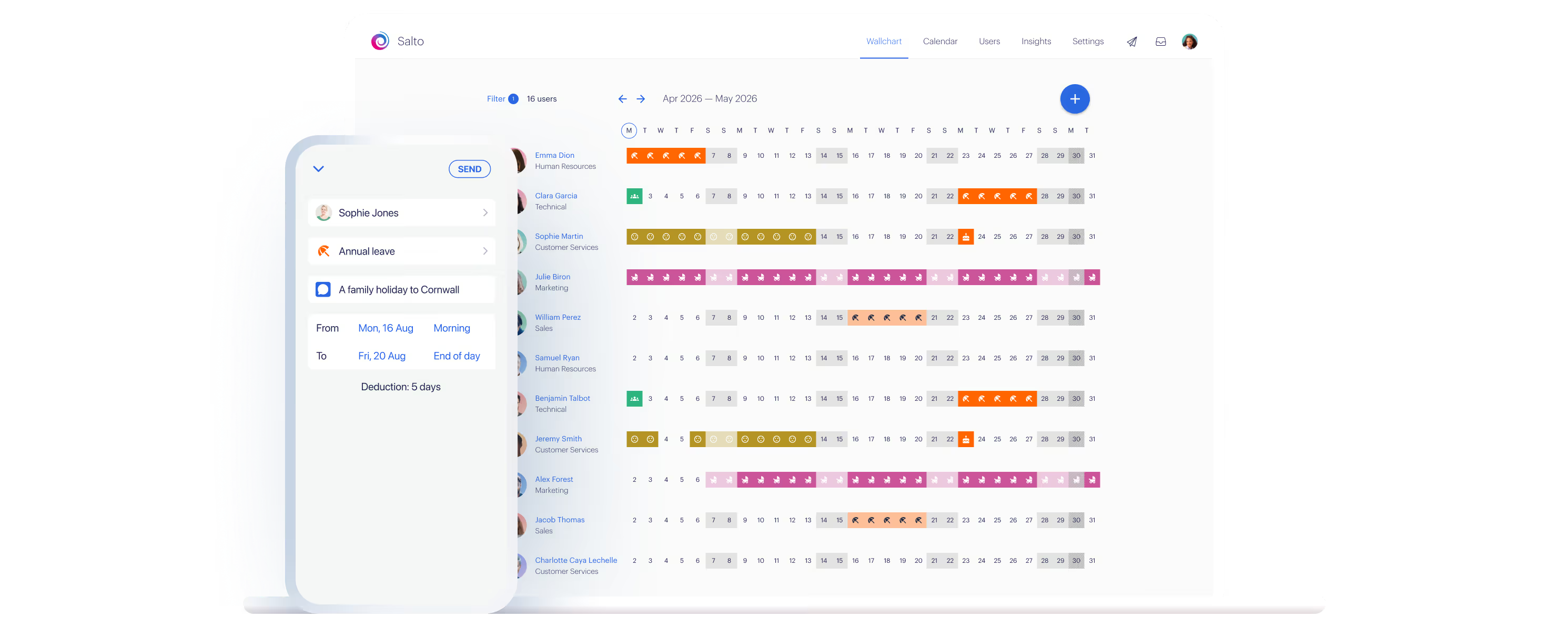
200,000+ people book their time off here
Set it up for your team before the next request lands.