
UK Holiday entitlement calculator
Use our holiday entitlement calculator to determine how much annual leave allowance an employee has left.
You can calculate for a full year or a pro-rata value for any part of the year. Work out how much annual leave someone is owed, for a full year or any part of one.
Choose days or hours, add a start or leaving date, and the calculator applies the statutory 5.6 weeks under the Working Time Regulations 1998. For irregular-hours and part-year workers, switch to accrual and it uses the 12.07% method.

28
days
0
minutes
That is 12.07% of the 282 hours worked so far this leave year.
Statutory entitlement is capped at 28 days however many hours are worked.

What holiday accrual actually means
Holiday accrual is the process of earning annual leave gradually over time worked, rather than receiving the full entitlement at the start of the leave year. A full-time employee in the UK, on the statutory 5.6 weeks builds up 28 days across the leave year, which is roughly 2.33 days a month. It arrives in instalments, whatever the contract says at the top.
For irregular hours and part-year workers, accrual is counted in hours instead of days. Every hour worked earns 12.07% of an hour of leave, which is 7 minutes and 15 seconds. Work 100 hours, accrue just over 12 hours of holiday. That is the whole concept.
Accrued holiday vs entitlement: two numbers, one question

When the balance stops being a number
A balance is only a number until somebody tries to use it. The day two people book the same Friday, accrued leave stops being a calculation and becomes a staffing question: who is in, who is out, and whether the week still covers. That is usually the point where a manager closes the calculator and opens the rota.

Why part-time holiday entitlement drifts out of date
Calculating holiday entitlement once is easy. Keeping it accurate all year is harder.
The allowance is set in January against a working pattern that changes by March. Someone drops a day, someone picks up two, and a part-timer's hours shift with the season.
The figure in the system stays put, quietly wrong. Usually nobody notices until someone hands in their notice and their final holiday pay depends on it. Your record says one number and theirs says another, eight days apart.
The maths was never the problem. The record and the reality stopped matching in the spring, and nobody was checking. That's how "Holiday 2025 FINAL v3" becomes the only holiday spreadsheet anyone trusts, and nobody can say whether the 16.8 in row twelve was calculated or typed in.

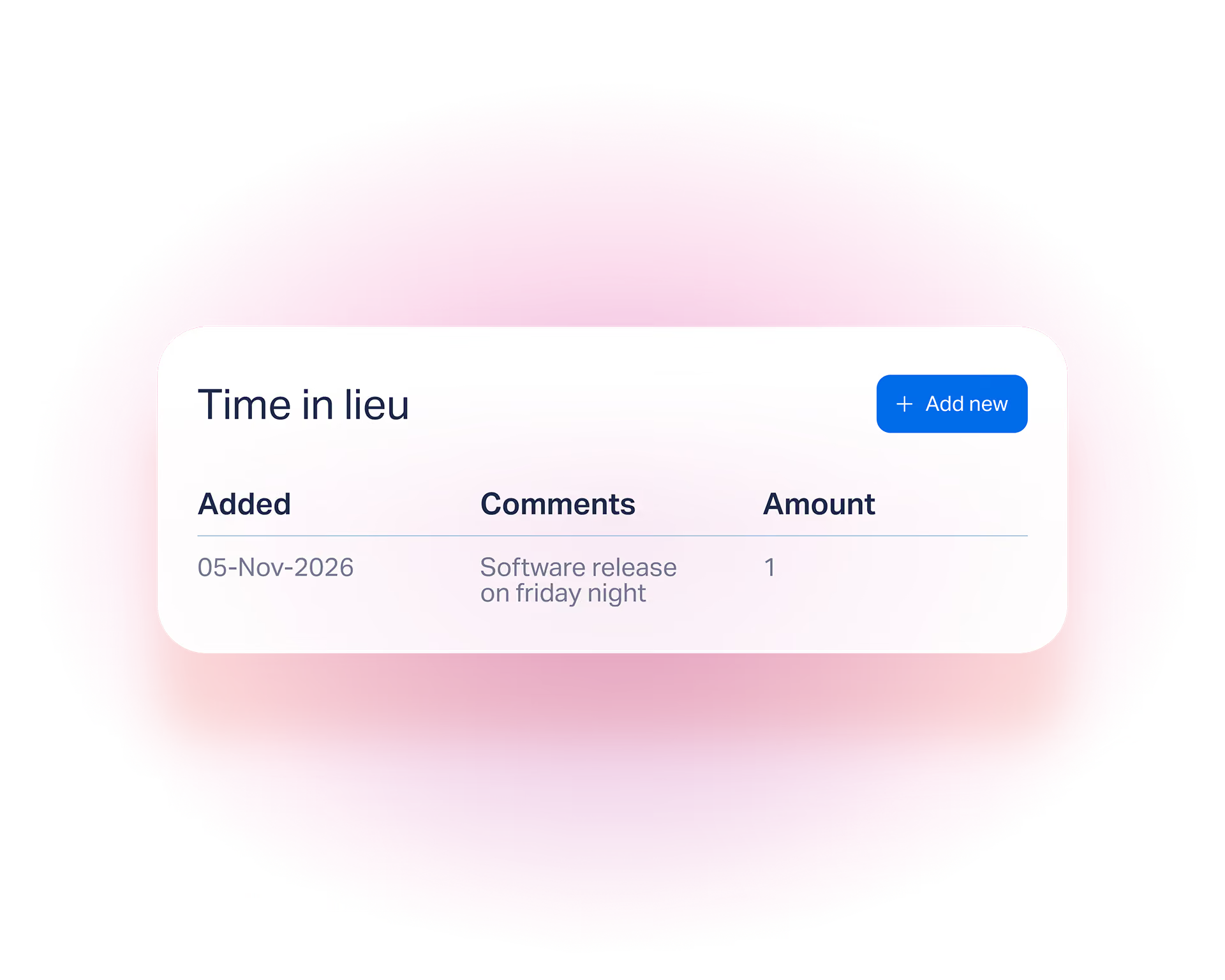
Time off in lieu
The leave nobody put in the contract
Annual leave accrues because time passes. Time off in lieu (TOIL) accrues because somebody covered.
That makes it the hardest leave balance to track. No date generates it and no policy predicts it. It happens on a Tuesday because the delivery was late, and if nobody logs it that evening, it exists only in someone's memory of a conversation in the car park.
That's why so much TOIL still lives on a signed paper sheet, and why so many TOIL policies say unused hours expire at the end of the month. Both are admissions. The hours were worked, they're owed, and the only record is in a drawer.
See Timetastic in action


Discover how thousands of SMEs use Timetastic to calculate annual leave
Say goodbye to manual spreadsheets and hello to Timetastic’s seamless employee holiday booking system. Calculate annual leave easily, giving back you and your business time, transparency and control.
Holiday allowance calculator FAQs
In the UK all full-time workers are entitled to a minimum of 5.6 weeks (28 days) paid holiday per year. This is known as "Statutory leave entitlement" and this can also include bank holidays.
Employers must not round down holiday entitlement, it can only be rounded up.
Public holidays can be included as part of that 28 days.
Pro-rata holiday entitlement is calculated based on how much annual leave an employee is entitled to depending on the time they have worked across a respective holiday year. Part-time workers are afforded the same annual leave entitlement as full-time workers, however as fewer hours are worked, this will mean your part-time employees will have less than 28 days statutory leave accrued due to reduced working hours.
If you have any employee on a zero-hours contract, you can use our handy holiday allowance calculator above to work out the number of hours they have accrued to work out any annual leave allowance. Using absence management software like Timetastic will give you greater transparency over annual leave entitlements.
If an employee leaves part way through the holiday year, they are entitled to part of their statutory entitlement based on how much of the leave year they are employed by you. If an employee has taken more than their annual leave entitlement when they are set to leave the business then you can communicate your intention to deduct the amount from the final pay in writing to your employee. On the flip side, you can offer payment in lieu to cover the total number of holidays they have left.
In recent years, the passing of Queen Elizabeth II and the Coronation of King Charles III has meant there have been additional bank holidays added to the calendar. This causes panic and headaches for HR managers and business owners alike, but we can alleviate any stress here.
Workers don’t have a statutory right to not work bank holidays. It may come as a surprise, but you get the final say on whether bank holidays are included in holiday entitlement allowances. Whatever you choose, this should be outlined in your staff handbook or contracts to give employees peace of mind and know what they are obliged to take and when.
Any employee working less than 5 days per week is regarded as part-time. Although they are entitled to 5.6 weeks of annual leave, this will amount to fewer than 28 days.
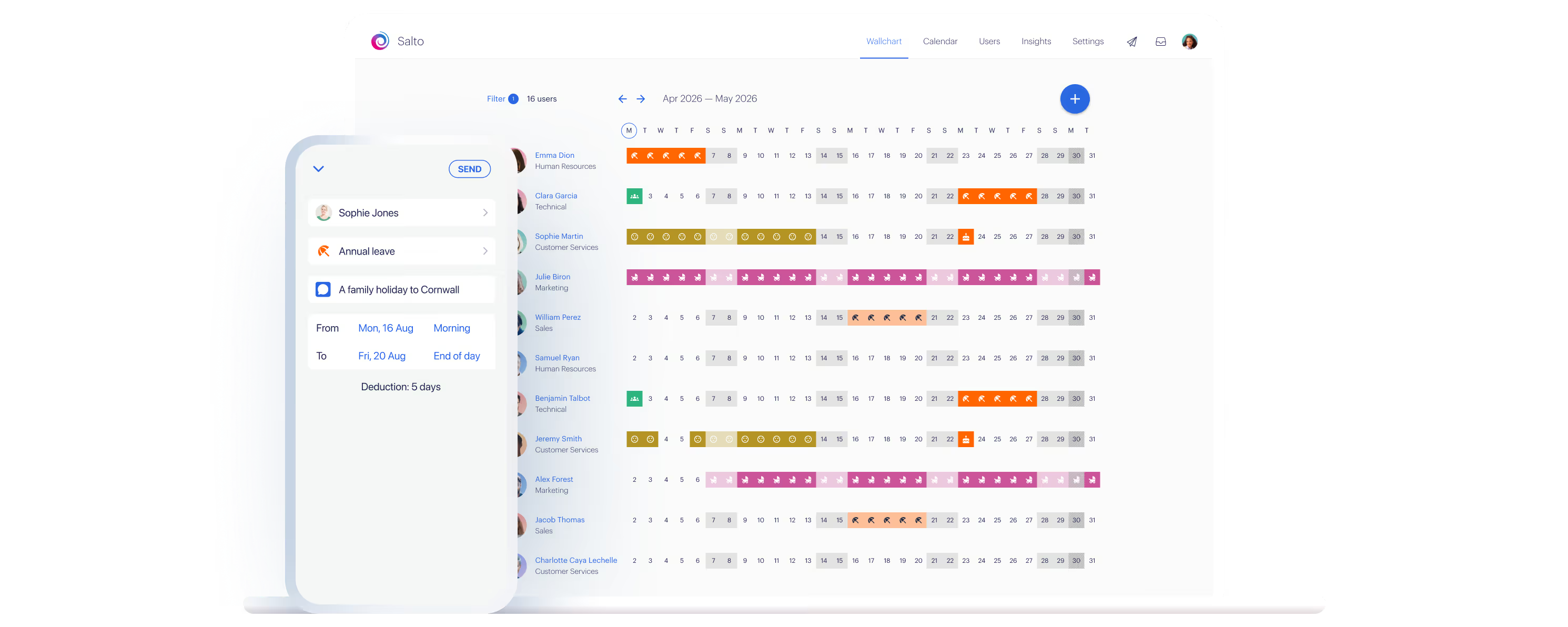
The 28 days are pro-rated according to how many days per week they work. For example, an employee who works 3 days per week will earn 3/5ths of 28 days. 16.8 days. Our staff leave planner can give you great visibility with specialist icons for those who are full-time or part-time, so you know exactly where you stand.
Of course, as an employer, you are welcome to offer more statutory leave and this is very common.
The rules that apply to statutory leave do not apply to the additional. For example an employee may need to be employed for a certain duration before being entitled to the additional allowance.
The upper limit of statutory leave is also 5.6 weeks. So although it can be pro-rated downwards for employees working less than 5 days per week, it does not increase for those working 6 or 7 days. For those workers, statutory leave will stay at 5.6 weeks.
The nature of your business and seasonality may determine that you need cover during bank holidays or the Christmas period. If so, you are entitled to specify that workers must take annual leave from their entitlement if they wish to have this time off. This will be deducted from annual leave allowances as normal.
Carry forward of annual leave is normally a contractual provision agreed between you and your employee.
The only statutory obligation to allow an employee to carry leave forward into the next year is when sickness or maternity prevents the employee from taking their entitlement. In this case a maximum of 20 days can be carried forward.
The excellent gov.uk website provides more detailed guidance on Holiday pay and emploment rights.
As too does ACAS (Advisory, Conciliation and Arbitration Service)
We also have some superb free resources with lots more information on how you can use Timetastic, such as our time off policies blog section.
A leave year is the 12-month period that holiday entitlement is measured over. Holiday is earned, booked and reset within it, so every allowance on this page is counted against one.
Employers can set any start date in the employment contract or staff handbook. January to December and April to March are the most common. If nothing is agreed in writing, the Working Time Regulations 1998 set the leave year to start on the employee's first day of work and renew on each anniversary.
Someone who joins or leaves partway through a leave year is entitled to a pro rata share of their allowance for the part they worked. Statutory leave that isn't taken by the end of the leave year is normally lost, unless the contract allows carry-over or sickness or maternity leave prevented it from being taken.
Get one month free!
Timetastic integrates with your favourite apps: Google Calendar, G Suite, Apple Calendar, Slack and Outlook Calendar.