




- Full-time UK workers are entitled to 5.6 weeks of paid holiday a year. Unused leave is a burnout risk, not a sign of commitment.
- In Timetastic's 2026 annual leave report, one in five respondents (20.7%) said they wouldn't use their full allowance.
- 26% of general managers and supervisors in the same report felt pressure not to take leave, the highest of any role.
- Employees who used all their holiday had a 6.5% higher chance of a promotion or raise than those who left 11 or more days unused (US data, Harvard Business Review).
- Leaders set the norm: book your own leave, switch off properly and check in with anyone who hasn't booked by mid-year.
Time off work isn't a productivity cost. Regular leave cuts unplanned sickness, sharpens focus and helps you keep good people, which is why UK workers are entitled to 5.6 weeks of paid holiday a year. Your job as a manager is to make taking it feel normal, plan cover early and lead by example.
Yet, when you look at how work actually happens across many companies, there’s a strange paradox. Managers often feel nervous when employees book holidays, worrying that targets will slip or customer service will drop. Meanwhile, employees feel guilty about stepping away.
In this comprehensive guide, we'll explore why taking time off matters for everyone, how managers can get comfortable with staff taking leave, the four types of rest every worker needs, and practical steps to build a workplace culture that actually encourages downtime.
Why is taking time off work so critical for employees and businesses?
Some business leaders still view holiday leave as a tax on productivity: a mild inconvenience where work comes to a screeching halt. But decades of research and workplace data show the exact opposite: workaholic cultures don't create more productive companies, they just breed burnout.
If you want your team to perform at their absolute best, here are four reasons why properly managed annual leave is your secret weapon.
1. It cuts unplanned sickness and absenteeism
It might sound back-to-front, but encouraging employees to take more planned time off dramatically reduces unplanned time off (like sick days).
When people work nonstop without meaningful breaks, their physical and mental health takes a beating. Chronic stress weakens the immune system, making employees far more susceptible to seasonal illnesses, high blood pressure, and long-term fatigue. By making sure your team gets regular rest, you help them build resilience against stress. They stay healthier, recover faster when they do catch a bug, and don't end up burned out.
If you're looking to streamline how your business tracks these absences, learning about what a great absence policy looks like can help you spot trends before they turn into chronic staffing issues.
2. It directly supercharges workplace productivity
Can taking four weeks off a year really yield more overall output than working straight through twelve months? Absolutely.
Taking time off to rest, relax, and focus elsewhere means your team returns with renewed energy and motivation. Strategist Joe Robinson sums up the relationship between rest and output perfectly:
In the knowledge economy, it’s not how maxed-out your grey matter is that leads to productive results, it’s how fresh your brain is. A focused, energised brain gets the most work done the fastest. Policies that keep minds in the red zone of chronic stress and see endurance as a measure of commitment undermine productivity and fly in the face of all the data.
When employees know they have regular breaks coming up, they work with greater focus and urgency. If you want to dive deeper into this topic, take a look at our article on increasing productivity in the workplace through annual leave.
3. It unlocks fresh creativity and breakthrough insights
If your business relies on problem-solving, innovation, or creative strategy, pushing staff to work constantly is counterproductive. Genuine insights rarely hit us when we're buried in back-to-back video calls or frantically clearing our inboxes. They happen when we step back and let our minds wander.
Author Shane Parrish highlights why modern work environments struggle with deep thinking:
Understanding comes from focusing, chewing, and relentlessly ragging on a problem. It comes with false starts, dead ends, and frustration. Thinking requires time and space. It’s slow. It means saying I don’t know. In short, thinking is everything the modern workplace is designed to eradicate.
When you give your brain time and space away from daily execution, your subconscious goes to work in the background. That’s why slow hunches suddenly crystallise into brilliant ideas while you're going for a walk, enjoying a quiet morning, or spending a week on a beach.
4. It attracts top talent and improves retention
A transparent, wellbeing-focused leave policy is a powerful magnet for high-performing candidates. Skilled candidates aren't looking for high-pressure environments where taking a day off is viewed with suspicion. They want employers who respect work-life balance and actively support personal time off.
Furthermore, access to reliable paid leave improves overall employment stability, lowering staff turnover and saving your business thousands in recruitment costs.
Why are managers (and staff) nervous about taking time off?
Even when managers understand the perks of annual leave, many still feel a pang of anxiety when a holiday request hits their inbox. With quarterly targets to hit, investors to satisfy, and customers expecting immediate responses, it's tempting to want everyone working as much as possible.
However, staying stuck in this mindset harms everyone. Here’s how you can shift your perspective and overcome holiday anxiety.
Overcoming the "slacker" myth
Some workers and managers fear that taking full advantage of their holiday allowance will make them look uncommitted, potentially damaging their career progression.
The data tells a completely different story. According to research published in Harvard Business Review, employees who used all their holiday had a 6.5% higher chance of a promotion or raise than those who left 11 or more days unused.
While correlation doesn't equal causation, this statistic completely debunks the idea that staying glued to your desk is the key to climbing the career ladder. Resting makes you a better, more effective contributor, and senior leaders notice quality work over sheer presence.
Tackling the annual leave backlog trap
When companies don't actively encourage staff to take leave throughout the year, they accumulate massive leave backlogs. In our 2026 annual leave report, a quarter of respondents (24.7%) had gone six months or more without a break. The result is a scramble for days off in November and December. This creates operational chaos and forces remaining staff to carry an unsustainable workload during peak season.
Even worse, when staff leave days on the table at the end of the year, they're effectively working for free. If you don't take the annual leave you're rightly owed, you aren't being extra dedicated; you're simply volunteering your time to the business.
If you find that your team regularly hoards their holiday allowance, make sure you check out our guide on what to do if employees don't take annual leave.
How can leaders get comfortable with their team taking leave?
There's only one true way for business owners and managers to fully appreciate the benefits of annual leave: take a proper holiday yourself.
And you have to do it right, which means completely disconnecting from work. If you’re checking Slack messages on the beach or reviewing spreadsheets in your hotel room, you aren't resting. Driven leaders often struggle with fear of missing out (FOMO) or fear that everything will fall apart in their absence.
To overcome holiday anxiety and enjoy a peaceful break, you must master the art of delegation.
Delegate processes, don't just pass tasks
If your team can't function without you answering questions every ten minutes, that’s a structural flaw in your business operations. You don't want to be a single point of failure.
Before you step away, make sure you document routine processes:
- Video walk-throughs: Use screen recording tools like Loom to record step-by-step guides for complex software or administrative tasks.
- Process documentation: Create quick user guides using documentation tools to detail key workflows and emergency contacts.
- Workflow automation: Use integration tools like Zapier to automate manual data entry and notification handoffs so tasks move along automatically without technical hassle.
Embrace the victory of an independent team
It might sting your ego slightly to discover that your business runs smoothly while you’re lying on a beach. But you should see that as a massive leadership success. Building a capable, autonomous team that steers the ship effortlessly in your absence proves you’ve set up strong systems.
Furthermore, your absence gives your team members valuable space to step up, make decisions, and think differently. When you return refreshed, your subconscious mind will have figured out taxing problems, helping you step back into high-level strategic thinking.
What does proper rest actually look like?
Taking time off isn't just about flopping onto the sofa and watching television for a week. While chilling out is great, true recovery happens when we're intentional about how we rest.
In his book The Power of Rest: Why Sleep Alone is Not Enough, Dr. Matthew Edlund breaks down four distinct types of rest that human beings need to recover properly. Making sure your team understands these different dimensions will help them return from holiday feeling genuinely recharged.
You may also have come across the seven types of rest, from physician Saundra Dalton-Smith: physical, mental, emotional, social, sensory, creative and spiritual. It's a finer-grained version of the same idea. Edlund's four are easier to plan a holiday around. Dalton-Smith's seven are handy for spotting what a burnt-out team member is actually short of.
1. Mental rest
Mental rest is about focusing intelligently on your environment in a way that rejuvenates your brain. It gives you the ability to gain calm, relaxed concentration quickly, anywhere.
- How to get it: Reading fiction, practising deep breathing exercises, going for walks without audiobooks or podcasts, and resisting the urge to constantly check news or social media on your phone.
2. Social rest
Social rest uses human connection to help you relax and restore. Even if someone works in a highly social job (like sales or customer service), spending unpressured time with close friends and family feeds a deep psychological need for non-transactional human contact.
- How to get it: Catching up with old friends over dinner, playing team sports, chatting on the phone with family, or simply enjoying unstructured downtime with loved ones.
3. Spiritual rest
Spiritual rest involves connecting with ideas, communities, or environments larger than ourselves, giving us a sense of fellowship and purpose. Stepping back to contemplate big questions helps prevent everyday work stress from dominating your entire worldview.
- How to get it: Spending time in nature, participating in community projects, practising mindfulness, or simply contemplating your life goals.
4. Physical rest
Physical rest calms your body’s simple physiological processes, triggering mental alertness, relaxation, and better cardiovascular health.
- How to get it: Lazing around and getting horizontal when you need sleep, but also engaging in restorative physical activity. If you sit at a desk five days a week, gentle exercise, yoga, or walking acts as a refreshing counterweight that your lower back will thank you for.
How to build a company culture that actively encourages time off
Knowing that rest is important is one thing; making it a core part of your workplace culture is another. Like any cultural shift, changing how your company views holiday time takes effort, but results can happen quicker than you think.
Here are practical strategies you can use to make booking leave feel completely normal.
Rethink conventional wisdom
Look at the restaurant industry: an environment notoriously famous for long hours, intense stress, and poor work-life balance (where 8 out of 10 chefs report experiencing poor mental health).
Yet, forward-thinking restaurants are leading the charge in changing things. Many urban restaurants now completely shut their doors on Mondays to protect staff wellbeing. Some Michelin-starred eateries have even cut working hours while keeping staff salaries the same.
Set clear leave targets and check in regularly
Gentle reminders go a long way. Highlight unused leave balances in monthly newsletters, bulletin updates, or during one-to-one catch-ups.
If you notice someone hasn't booked off any days by mid-year, sit down with them. Ask why. Is their workload overwhelming? Are they worried about stepping away? Identifying these bottlenecks early stops leave hoarding.
You can also set soft policy guidelines, such as suggesting that employees take at least 50% of their annual leave allowance by the end of June.
Align incentives with healthy habits
In competitive roles like sales, employees often skip holidays to chase performance bonuses. This leads to exhausted staff forcing themselves to overachieve in a state of constant burnout.
Try linking performance bonuses to leave targets. For example, condition sales bonus payouts on taking a minimum amount of leave each quarter. Healthy, switched-on workers who take regular rest will consistently outperform tired, burned-out staff in the long run.
Lead by example from the top
Culture is set by leadership behaviour. If managers stay in the office until 7pm or 8pm every night, send emails on weekends, and brag about unused holiday, employees will mirror that behaviour.
Managers need to set the tone:
- Leave the office on time.
- Turn off notifications outside of working hours.
- Book and take proper holidays without checking in.
When your team sees leadership prioritising rest, they'll feel able to do the same.
Why spreadsheets make leave harder to manage
Trying to manage annual leave through messy spreadsheets, paper forms, or endless email chains is a recipe for admin headaches. Spreadsheets get out of date fast, leading to mathematical errors, surprise short-staffed days, and confusion over who is actually in the office.
This is precisely why we built Timetastic.
Timetastic is the simple staff leave planner built to give small and medium-sized businesses complete clarity over holiday and absence tracking.
Here is how simple digital leave tracking transforms your company culture:
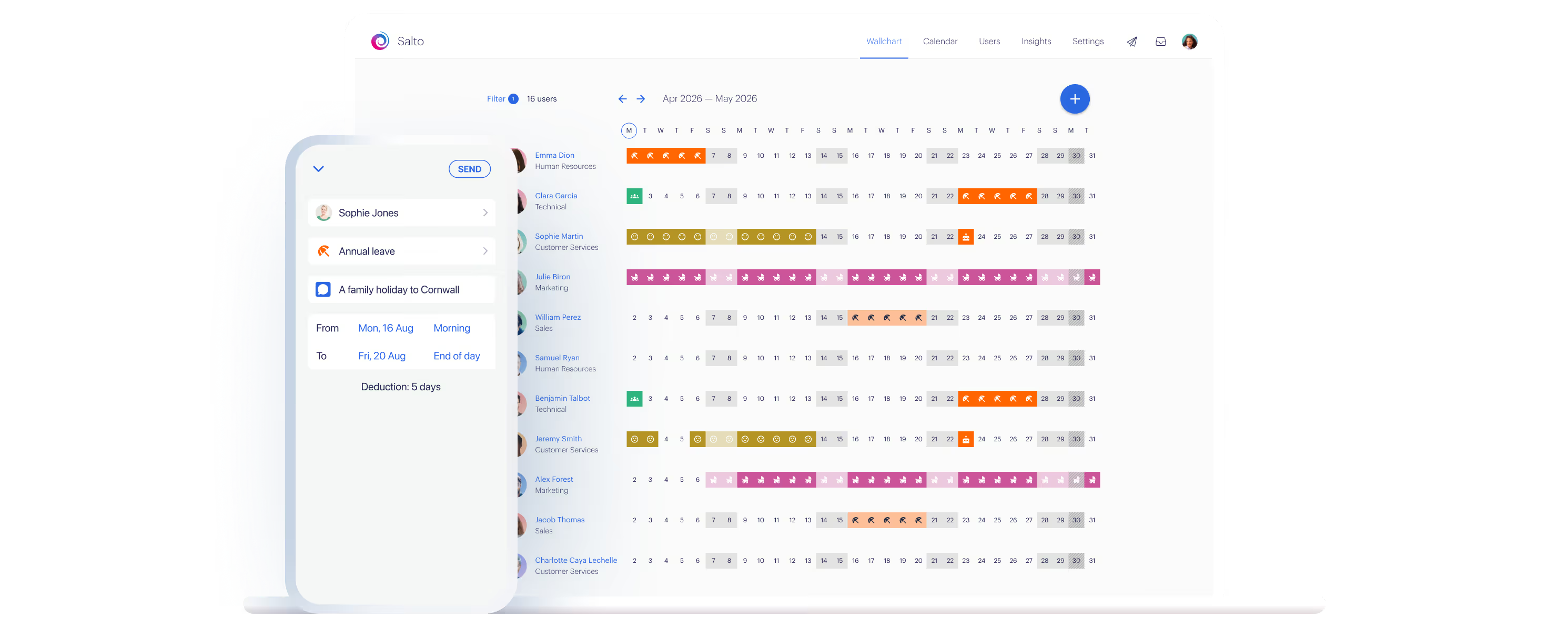
- Visual wall charts: See who is off at a glance across departments, making it simple to coordinate cover and avoid holiday overlap chaos.
- Instant calendar sync: Leave shows up in Google Calendar and Outlook, and in Slack or Microsoft Teams, so everyone stays on the same page.
- Automatic calculations: Takes the pain out of tracking statutory entitlements, carried-over days, and sick leave without manual maths errors.
- Mobile app access: Employees can check their remaining allowance and request time off in a few taps from their phone.
By taking the hassle out of holiday tracking, you make booking time off feel like a seamless, normal part of working at your company.
Managing time off with Timetastic
Managing time off effectively is about building an energised, resilient, and high-performing team. When you give your team permission to rest, good things happen. Your employees stay healthy, your business culture thrives, and your bottom line stays strong.
Ready to make booking leave feel normal? Start your free 30-day trial, no credit card required.
FAQ
Does taking all their annual leave hurt employees' chances of promotion?
No. Research published in Harvard Business Review found employees who used all their holiday had a 6.5% higher chance of a promotion or raise than those who left 11 or more days unused. Rested people do better work, and good managers notice output, not presence.
What should managers do if employees don't take their annual leave?
When staff hoard their holiday allowance, it usually leads to severe burnout or a chaotic end-of-year rush for days off. Managers should sit down with employees during one-to-one check-ins to understand why they aren't booking time off — whether it's an overwhelming workload or a fear of stepping away. Setting soft guidelines, such as encouraging everyone to take at least 50% of their leave by mid-year, helps keep rest balanced.
Can employers make staff take holiday?
Yes. Employers can tell staff when to take statutory holiday, for example a Christmas shutdown, as long as they give notice at least twice as long as the leave: two days' notice for one day off. Set this out in your holiday policy so nobody is caught out.
Should managers contact staff while they're on holiday?
Only in a genuine emergency, and only through a route you've agreed before they leave. A good handover and a named point of cover mean nobody needs to message someone on a beach. If you find you always have to, that's a process gap to fix, not a staff problem.






200,000+ people book their time off here
Set it up for your team before the next request lands.