




- Unfair dismissal protection will start after six months, not two years. From 1 January 2027, in England, Scotland and Wales, it covers anyone already six months into the job on that date.
- Employees now have longer to bring a claim. Since 1 October 2026, most employment tribunal claims can be brought up to six months (less a day) after the event, double the old limit, so your records need to outlive someone’s last day.
- Some obligations apply from day one. You need a right to work check before they start, a written statement of terms, and Statutory Sick Pay from the first day of sickness.
- The duty to prevent sexual harassment has tightened. From 30 October 2026, employers must take all reasonable steps to prevent it, and must not permit customers or other third parties to harass their staff.
- Watch who isn’t taking a break. Timetastic’s 2026 survey of 6,000 people found 24.7% had gone six months or more without annual leave.
The six stages of the employee lifecycle
Every employee moves through the same six stages, from the job advert to their last day. In a small business, there’s rarely an HR team to hand them to, so the line manager usually owns all six.
- Hiring: the advert, interviews, offer and right to work check.
- Onboarding: day one to the first few months, including the paperwork.
- Probation: an agreed trial period to check fit and performance.
- Development: reviews, training, pay and any adjustments someone needs.
- Retention: absence, wellbeing and keeping people, for as long as they work for you.
- Exit: resignation, dismissal or redundancy, and the paperwork after.
Here’s the thing: most employee life cycle models stop at the stage names. What catches managers out is that UK employment rights switch on by length of service. Think of the lifecycle as a calendar that runs from their start date, with key dates you can’t afford to miss.
What are the key dates in the employee lifecycle?
Most key dates are set by length of service, so count each one from the person’s start date. These are the legal minimums.
Which 2026 and 2027 UK law changes affect the employee lifecycle?
Employment law doesn’t stand still, and a process that was right last year can quietly drift out of date. The simplest fix is a regular habit: review your process once a year, and whenever the law moves.
Northern Ireland has its own unfair dismissal law, so the six-month change doesn’t apply there. If you employ people in Northern Ireland, check each change before relying on it.
The Employment Rights Act 2025 is being phased in, and the table below sets out each change and when it takes effect. Dates can move, so bookmark the government’s implementation timeline, which is updated whenever they do.
Each time something changes, check three things:
- Contracts and offer letters: probation length, notice and sick pay terms.
- Policies: absence, flexible working and harassment.
- Your calendar: any new threshold that moves a review date.
Hiring: check the right to work before day one
Before the welcome emails and desk set-up, one job can’t wait: checking they’re allowed to work in the UK. That’s on you as the employer, and it must happen before they start.
If you employ someone who doesn’t have the right to work in the UK and you didn’t do the checks properly, you can face a civil penalty of up to £60,000 for each illegal worker. If you can show you did the checks correctly, you won’t have to pay it.
Use the offer letter to settle the terms you’ll need on day one: pay, hours, start date and probation. Then the written statement is mostly copy and paste.
Onboarding: the written statement comes first
Plenty of onboarding is the friendly stuff, but one item is a legal duty and can’t slip. On their first day, the law expects you to hand over the principal written statement of their terms. The GOV.UK guidance on written statements sets out what it must cover, including probation length and conditions. The wider statement follows within two months, and any later change must be confirmed within a month.
Beyond the paperwork, the first weeks are about removing faff. A working login, a rota they can see, and someone who checks in. Our guide to settling new starters in properly covers the human side.
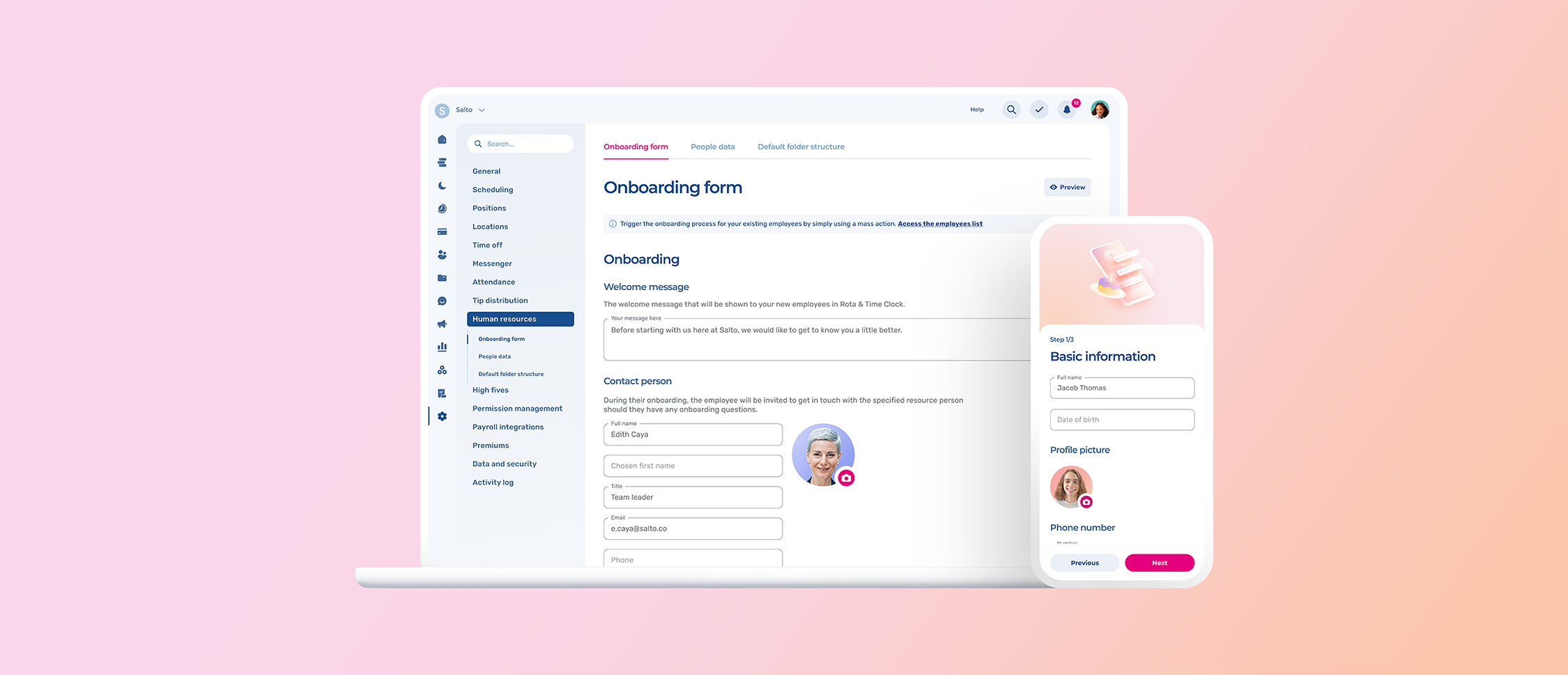
To keep it all in one place, Timetastic’s Rota & Time Clock lets you welcome new hires, fill in their HR records and assign onboarding tasks. Here’s what to look for in onboarding software.
Probation: the six-month mark matters most from 2027
Until now, probation has been planned around a two-year wall. That changes on 1 January 2027: six months’ service is when ordinary unfair dismissal protection starts. For dismissals before that date, it’s still two years.
It reaches further than new hires. Acas guidance on probation periods says anyone with at least six months’ service on 1 January 2027 is protected from that day. In practice, that’s everyone who started with you by early July 2026. According to Business.gov.uk, around 6.3 million employees have been with their employer for between six months and two years.
Probation itself isn’t a legal requirement, and it can be any length. Acas also warns that ending probation before the six-month mark doesn’t remove legal risk, and that some specialist roles may need longer.
So plan reviews that land well before month six. Acas guidance on probation reviews leaves the number and timing to you. It does expect one-to-one meetings, usually led by the manager, with records shared after each one and a final review on the outcome.
Development: reviews are your written record
A review is your written trail of what was agreed, and when. If a performance problem ever ends in a formal process, your review notes are the record of what was said.
Reviews are also where support gets written down. Employers must make reasonable adjustments for disabled employees. People don’t have to tell you they’re disabled, so make it easy: explain that adjustments are available and give examples. Our guide to building a performance review process covers goals, metrics and feedback.
A review is also a good moment to check their leave balance. Based on 1.2 million days of leave booked in the first half of 2025, the Timetastic burnout report found 1 in 4 employees went three months without a holiday. 275 people went 300 days or more without any time off.
Retention: the duties that last as long as they work for you
Some duties apply from day one and last for as long as someone works for you. Two stand out: sick pay and harassment prevention.
SSP is payable from the first day of sickness absence, at £123.25 a week or 80% of average weekly earnings, whichever is lower, for up to 28 weeks. There’s no minimum earnings level any more.
Since 26 October 2024, employers have had to take reasonable steps to prevent sexual harassment. From 30 October 2026, that becomes all reasonable steps, and you must not permit customers or other third parties to harass your staff.
Beyond the legal duties, keeping people means making sure they actually get a break. Too many don’t: our work-life balance report, drawn from leave data on more than 180,000 workers, found 19.9% of more than 372,710 holidays booked in 2025 were later cancelled. In our 2026 annual leave report, a survey of 6,000 people from Timetastic’s customer base, 24.7% said they’d gone six months or more without annual leave.
Your leave policy can work as a retention tool in its own right. One Timetastic customer, Stasher, adds a day’s leave for every year of service, up to five extra days, and said it had kept over 80% of the people it had ever hired.
To see whether people are staying, track your employee turnover rate: the number of leavers in a period, divided by your average headcount, times 100. To understand why they leave, and what keeps them, read our guide to staff retention for UK SMBs.
Exit: what you owe someone who’s leaving
Whether someone resigns or you end their employment, the way they leave matters as much as the way they joined. You owe them notice, final pay and, if you’re the one ending it, a fair process.
If you end someone’s employment, the statutory minimum notice depends on how long they’ve worked for you: one week if it’s at least a month but under two years, then one week for each full year, up to a maximum of 12 weeks. So four years and nine months’ service means four weeks’ notice. Their contract can give more, never less. Here’s how statutory and contractual notice fit together.
Final pay must include any untaken statutory holiday, even after a gross misconduct dismissal. If it’s a redundancy, anyone with two years’ continuous service is owed statutory redundancy pay.
If they’ve resigned, get it in writing and agree a last day. Our checklist on what to do when an employee resigns covers handover, kit and the exit interview.
Running the employee lifecycle day to day
Put it on a calendar. For each person you need a handful of dates: start date, two months, three months, review dates, the six-month mark and the two-year mark. Miss one and you’re firefighting.
Then keep records in one place, not in someone’s inbox. And get advice before a hard conversation, not after it. Timetastic customers get a free HR and employment law advice line.
Timetastic keeps all of it together: rotas, clocking in, HR records, onboarding tasks and signed documents, whoever owns HR. So the dates that matter are where you can see them, not in a spreadsheet only one person understands.
Start your free 30-day trial, no credit card required.
FAQ
What is employee lifecycle management?
Employee lifecycle management means running each stage on purpose, with planned dates, a clear owner and written records from offer to exit. In a small business, that’s usually the line manager rather than an HR team.
What are the 7 stages of the employee life cycle?
There’s no official number: models differ depending on whether they split out attraction, recruitment or offboarding. The legal deadlines don’t change however you count them. This article covers six: hiring, onboarding, probation, development, retention and exit.
Do employees get sick pay during probation?
Yes. Employees are entitled to sick pay during their probation period, and Statutory Sick Pay is due from the first day of sickness absence for anyone eligible.
Do employees get notice if they’re dismissed during probation?
Yes, once they’ve worked for you for a month. The statutory minimum notice is one week for anyone with one month to two years’ service, and their contract can give more, never less.
How long does someone have to bring an employment tribunal claim?
Six months less a day for most claims, where the act or dismissal happened on or after 1 October 2026. Earlier events keep the old three-month limit.
When does an employee qualify for statutory redundancy pay?
After two years’ continuous service. That’s when statutory redundancy pay applies, and contracts can offer more or a shorter qualifying period, but never less than the statutory amount.



200,000+ people book their time off here
Set it up for your team before the next request lands.